
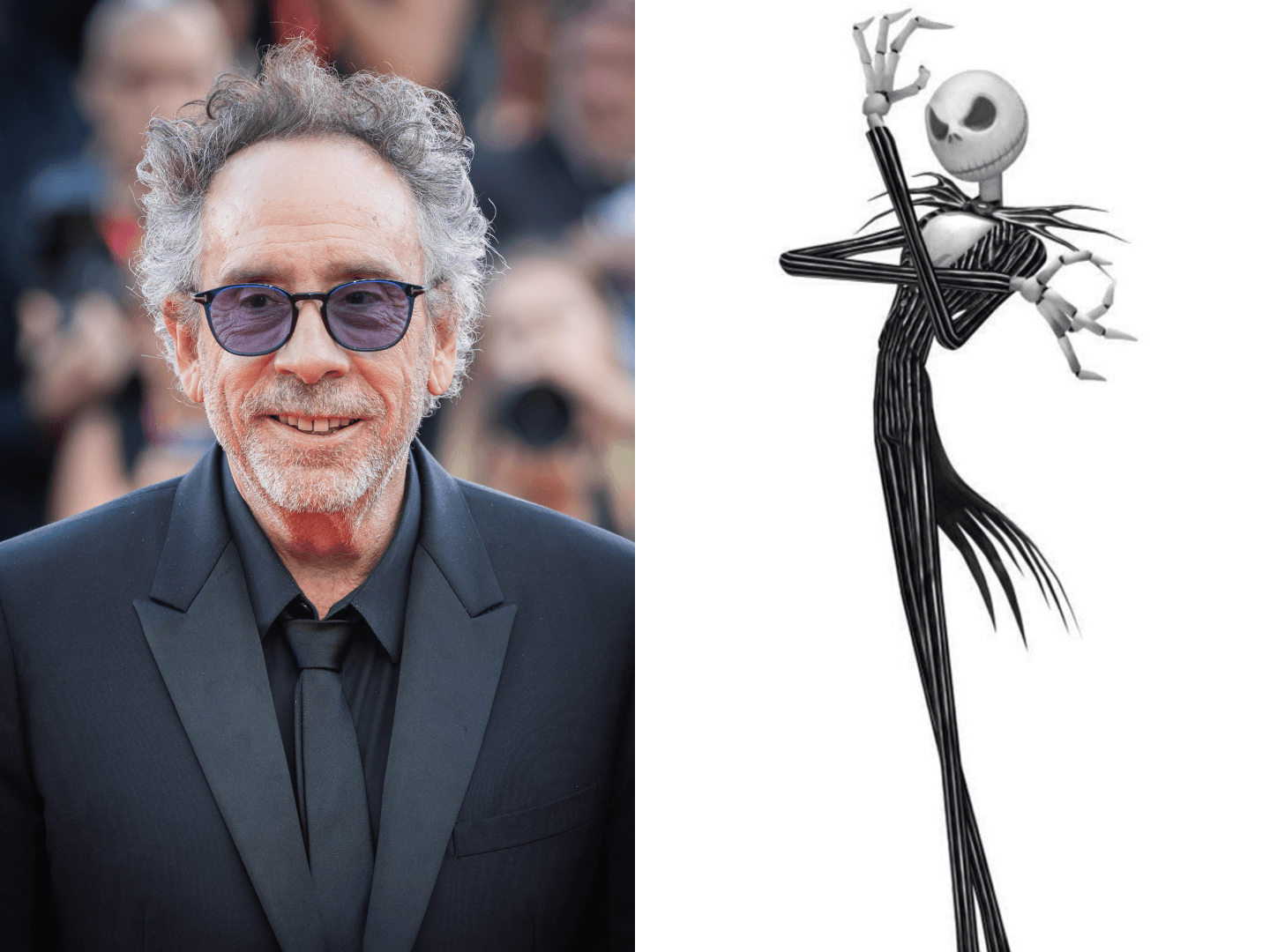
Tim Burton characters are among cinema’s most recognizable figures, defined by pale skin, dark eyes, and a profound sense of not belonging. From Edward Scissorhands to Jack Skellington, these outsiders have shaped a gothic aesthetic that has endured for nearly four decades. This article explores the most iconic Tim Burton characters, the archetypes they embody, and the collaborators who brought them to life.
What Makes a Tim Burton Character Instantly Recognizable
Burton’s visual style is so distinctive that it has become an adjective: Burtonesque. The British Film Institute describes his world as one of “skewed angles and twisted trees,” perfectly matched to his “darkly humorous gothic tales of lonely outsiders” . This aesthetic translates directly into his characters.
His protagonists typically possess exaggerated features, stitched-together bodies, or ghostly pallor. Yet their appearance serves a deeper purpose. They are almost always misunderstood by the “normal” world around them, longing for connection while remaining fundamentally isolated.
The filmmaker himself has acknowledged that this recurring theme stems from personal experience. A Spanish-language academic text on Burton’s work notes that his protagonists are “uprooted, introverted, melancholic outsiders” who live “an existential duality between their inner world and external reality” . These characters reflect Burton’s own childhood isolation in suburban Burbank, California.
The Most Iconic Original Tim Burton Characters
Edward Scissorhands remains the clearest expression of Burton’s central theme. The 1990 film follows an unfinished artificial man, portrayed by Johnny Depp, who is left with scissors for hands after his inventor dies . The BFI calls it “quintessential Burton, through and through,” noting that Edward’s isolation mirrors the director’s own teenage years .
Jack Skellington from The Nightmare Before Christmas (1993) offers a different kind of outsider story. As the Pumpkin King of Halloween Town, Jack grows weary of his routine and attempts to take over Christmas . The Festival Lumière describes him as “a wandering loner” and “the most endearing of monsters” .
Beetlejuice, portrayed by Michael Keaton in the 1988 film, represents Burton’s more chaotic side. The character is a “bio-exorcist” who promises to rid homes of the living, though he proves dangerously unreliable . Keaton’s performance was described as “wonderfully wild and zany” .
Sally, from the same film as Jack, is another original creation. Created by Dr. Finkelstein, she is a stitched-together rag doll who longs for freedom and secretly loves Jack . Screen Rant notes she is “incredibly sweet and kind,” constantly trying to help others despite poor treatment .
Emily from Corpse Bride (2005) completes this gallery of memorable originals. She is a deceased young woman who rises from the grave after a shy groom accidentally proposes to her . Despite her jealous temper, she ultimately proves “loving” and selfless .Quick Bio: Tim Burton
Reimagined Classics Through a Burton Lens
Burton’s Batman (1989) and Batman Returns (1992) transformed familiar characters into distinctly Burtonesque figures. Jack Nicholson‘s Joker became a “disfigured clown” who “considers crime an art” . The Festival Lumière highlights the museum scene where the Joker, dancing to Prince, smears masterpieces and “bows to his master of horror: Francis Bacon” .
Catwoman, portrayed by Michelle Pfeiffer in Batman Returns, fits Burton’s “progressive woman” archetype. The Museum of Modern Art curatorial essay explains this archetype as a female character who “perceives the world differently” and serves as the audience’s avenue for understanding the protagonist . Her dynamic with Batman reveals identity through shared understanding.
Willy Wonka in Charlie and the Chocolate Factory (2005) became another Burton outsider. His strained relationship with his father aligns him with the “flawed father” archetype, a figure MoMA describes as “well intentioned but ultimately disappoints” .
Sweeney Todd (2007) represents Burton’s darkest protagonist. The Festival Lumière calls him a “damaged, walking-dead man” seeking revenge, noting it is “perhaps the darkest of Tim Burton’s films” . The character’s razors serve to “cut out the lies, hypocrisy and evil of the triumphant bourgeoisie” .
The Recurring Archetypes Behind These Characters
MoMA’s curatorial essay for Burton’s 2009 retrospective identifies three recurring character types across his filmography . The misunderstood outcast is the central figure, a lonely protagonist unable to fit into society’s normalizing tendencies.
The progressive woman is open-minded and perceptive, often serving as the audience’s guide to the protagonist’s motivations . Examples include Lydia Deetz in Beetlejuice, who is “the only human character who senses the presence of the Maitlands” . Similarly, Ari in Planet of the Apes speaks out for human rights and is branded and cast out for her affinity with humans .
The flawed father is typically absent or disappointing, often appearing only in flashbacks or dreams. MoMA notes that “the death of the flawed father is often an important part of the narrative,” communicating his “detached and unattainable nature” .
The Collaborators Who Shaped These Characters
Burton’s characters would not exist without his most trusted collaborators. Johnny Depp has appeared in eight of Burton’s directed features, beginning with Edward Scissorhands in 1990 . Helena Bonham Carter has starred in seven of his films, starting with Planet of the Apes in 2001 .
Michael Keaton has collaborated with Burton on five films, including Beetlejuice, both Batman entries, and Beetlejuice Beetlejuice (2024) . Winona Ryder has appeared in four projects, including Edward Scissorhands and the 2024 sequel .
Danny Elfman composed the scores for nearly all of Burton’s films. A Warner Bros. Records announcement for their 25th anniversary box set documents 13 collaborations between Elfman and Burton, from Pee-wee’s Big Adventure (1985) through Alice in Wonderland (2010) . The only Burton feature without an Elfman score is Ed Wood (1994).
Why These Characters Continue to Resonate
Tim Burton characters endure because they articulate a universal experience. The feeling of being different, of not fitting in, transcends generations and cultures. The BFI notes that Burton’s “darkly humorous gothic tales of lonely outsiders” have made him “one of the most iconic Hollywood filmmakers working today” .
From the 1980s through the 2024 release of Beetlejuice Beetlejuice, these characters have maintained their cultural presence. They appear in costume designs, fan art, and Halloween celebrations decades after their creation. Their visual distinctiveness ensures instant recognition across generations.
Burton’s characters matter because they transform the experience of being an outsider from a source of pain into a source of identity and even beauty. They show audiences that the monsters are not always monstrous, and the ghosts often have more humanity than the living. In a world that prizes conformity, these pale, stitched, and ghostly figures remind us that difference is not a flaw but a form of magic.
Frequently Asked Questions About Tim Burton Characters
Who is Tim Burton’s most famous original character?
Edward Scissorhands is often cited as Burton’s most iconic original creation. The 1990 film follows an unfinished artificial man, portrayed by Johnny Depp, who is left with scissors for hands after his inventor dies. The British Film Institute describes it as “quintessential Burton” and notes that Edward’s isolation mirrors the director’s own teenage years. The character remains a definitive symbol of Burton’s outsider archetype.
What are the three recurring character archetypes in Tim Burton’s films?
The Museum of Modern Art identifies three archetypes across Burton’s filmography. The misunderstood outcast is the central figure, a lonely protagonist unable to fit into society. The progressive woman is perceptive and open-minded, serving as the audience’s guide to the protagonist’s world, as seen with Lydia Deetz in Beetlejuice. The flawed father is well-intentioned but ultimately disappointing, often appearing only in flashbacks or dreams.
How many Tim Burton films has Johnny Depp appeared in?
Johnny Depp has collaborated with Tim Burton on eight directed features. Their partnership began with Edward Scissorhands in 1990 and continued through films including Ed Wood, Sleepy Hollow, Charlie and the Chocolate Factory, Sweeney Todd, and Dark Shadows in 2012. Burton has hinted that their professional partnership may not be over, despite a hiatus since Dark Shadows.
Who composed the music for most Tim Burton films?
Danny Elfman has been Burton’s primary composer for more than 35 years, scoring 17 Burton films. Their collaboration began with Pee-wee’s Big Adventure in 1985 and includes Batman, Beetlejuice, Edward Scissorhands, Big Fish, and Alice in Wonderland. Elfman also wrote the music and songs for The Nightmare Before Christmas and provided the singing voice of Jack Skellington.
Will there be a Beetlejuice 3?
No official greenlight has been announced for Beetlejuice 3. Michael Keaton, who reprised his role as Betelgeuse in the 2024 sequel Beetlejuice Beetlejuice, has stated he would return for another installment, saying “Oh yeah, I’d do it every year.” The 2024 film reunited Keaton with Winona Ryder and Catherine O’Hara, alongside newcomers including Jenna Ortega and Willem Dafoe.
