
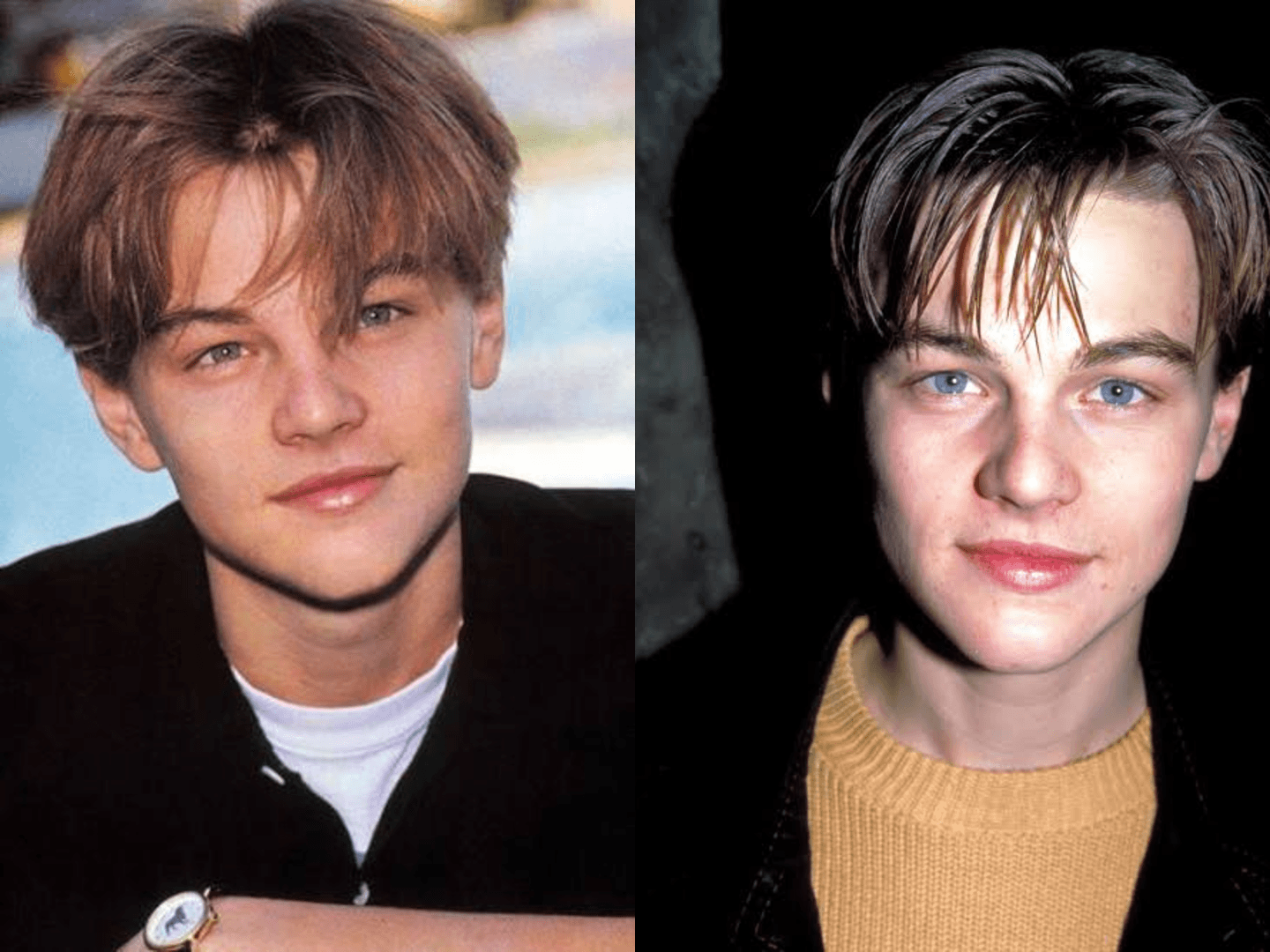
Leonardo DiCaprio Young: An Early Look
Leonardo DiCaprio young refers mainly to the period when the actor moved from childhood and television work into acclaimed film performances and international stardom. Born in 1974, DiCaprio began acting professionally at a young age before becoming widely recognized through films including This Boy’s Life, What’s Eating Gilbert Grape, Romeo + Juliet, and Titanic.
Early Life and Childhood
Leonardo Wilhelm DiCaprio was born on November 11, 1974, in Los Angeles, California. His early years were spent in the city, where he developed an interest in performing and eventually pursued acting professionally rather than treating entertainment simply as a childhood pastime.
DiCaprio’s early interest in acting led him toward television and commercial work while he was still young. His professional beginnings demonstrate that his Hollywood career developed gradually, rather than beginning suddenly with Titanic several years later.
His early television experience gave him an opportunity to work in front of cameras before he became a feature-film performer. That background was important because it introduced him to professional production environments while he was still establishing himself as a young actor.
Leonardo DiCaprio’s Early Acting Career
DiCaprio made his feature-film debut in 1991 with Critters 3. The horror sequel was a modest beginning compared with the major productions that followed, but it marked his transition from television appearances into feature filmmaking.
Around the same period, DiCaprio joined the television sitcom Growing Pains, playing Luke Brower. His recurring role gave him additional exposure and demonstrated that he could work within an established television ensemble before moving toward more demanding film opportunities.
The significance of these early roles becomes clearer when compared with his later career. Unlike actors who receive immediate recognition from one major production, DiCaprio spent several years building experience across television and film before earning serious attention from critics and major filmmakers.
| Field | Details |
|---|---|
| Full Name | Leonardo Wilhelm DiCaprio |
| Age | 51 |
| Date of Birth | November 11, 1974 |
| Birthplace | Los Angeles, California, U.S. |
| Nationality | American |
| Profession | Actor, Film Producer |
| Height | 6 ft (1.83 m) |
| Education | Los Angeles Center for Enriched Studies; Seeds Elementary School |
| Years Active | 1989–present |
| Notable Works | Titanic, Romeo + Juliet, The Aviator, The Departed, Inception, The Revenant, The Wolf of Wall Street |
| Awards | Academy Award, BAFTA Award, Golden Globe Awards |
| Net Worth | Estimated at approximately $300 million |
| Spouse/Partner | No publicly confirmed spouse |
| Social Media | No verified personal account confirmed |
This Boy’s Life Became a Major Turning Point
A major step forward arrived with This Boy’s Life, released in 1993. DiCaprio played Tobias Wolff in the drama, appearing opposite Robert De Niro and working under director Michael Caton-Jones. The role placed him alongside an established screen actor at an important stage of his development.
The film was significant because DiCaprio was no longer simply appearing as a young performer in supporting television or genre roles. His work in This Boy’s Life demonstrated an ability to carry emotionally demanding scenes while sharing the screen with a highly experienced dramatic actor.
The performance also helped establish a pattern that would define his young career. Rather than concentrating exclusively on conventional teenage roles, DiCaprio increasingly selected projects that allowed him to portray complicated characters and work with respected directors and performers.
What’s Eating Gilbert Grape and Oscar Recognition
Later in 1993, DiCaprio appeared in What’s Eating Gilbert Grape, directed by Lasse Hallström and starring Johnny Depp as the title character. DiCaprio played Arnie Grape, a young character with an intellectual disability, in a performance that attracted substantial critical attention.
The role became one of the defining performances of his young career because it earned DiCaprio his first Academy Award nomination. At the 66th Academy Awards in 1994, he was nominated for Actor in a Supporting Role for What’s Eating Gilbert Grape.
DiCaprio did not win that year. Tommy Lee Jones received the Supporting Actor award for The Fugitive, but the nomination itself represented an extraordinary achievement for a performer who was still only nineteen when the film was released.
This recognition also changed how the industry viewed him. His career was no longer based primarily on the promise associated with a young actor. The Academy nomination provided an official indication that his performances were being taken seriously within the wider film industry.
The Basketball Diaries and Expanding Range
DiCaprio continued exploring darker and more challenging material with The Basketball Diaries, released in 1995. The film allowed him to portray Jim Carroll, a young writer and musician whose life becomes increasingly affected by drug addiction and personal instability.
That performance followed What’s Eating Gilbert Grape and reinforced his willingness to tackle emotionally difficult characters. His choices during this period helped distinguish him from young performers whose careers depended mainly on conventional romantic or family-oriented roles.
In the same year, DiCaprio appeared in The Quick and the Dead, a western featuring Sharon Stone, Gene Hackman, and Russell Crowe. Moving between serious drama and a larger-scale genre production showed that his young career was becoming increasingly versatile.
Leonardo DiCaprio Young in Romeo + Juliet
The next major stage arrived with Romeo + Juliet in 1996. Directed by Baz Luhrmann, the film reimagined William Shakespeare’s tragedy through a contemporary visual style while retaining Shakespeare’s original dialogue. DiCaprio played Romeo opposite Claire Danes as Juliet.
The role significantly expanded DiCaprio’s visibility among younger international audiences. His performance combined the dramatic skills he had developed in earlier films with the romantic appeal required for one of literature’s best-known young characters.
Compared with What’s Eating Gilbert Grape, Romeo + Juliet presented DiCaprio in a much more commercially accessible setting. The contrast showed how effectively he could move between serious character drama and a visually ambitious romantic production without abandoning the dramatic qualities that had attracted critical attention.
Titanic Changed Everything
The decisive transformation came with Titanic, released in 1997 and directed by James Cameron. DiCaprio played Jack Dawson, a young artist who falls in love with Rose DeWitt Bukater, portrayed by Kate Winslet, aboard the doomed ocean liner.
DiCaprio was 22 years old when Titanic entered production and was still only 23 when the film became a worldwide phenomenon. His age and youthful appearance suited the character of Jack, while his previous dramatic work gave him experience beyond that of a typical newcomer.
The film represented a major contrast with his earlier projects. This Boy’s Life and What’s Eating Gilbert Grape had established him as a serious young performer, while Romeo + Juliet had increased his popularity. Titanic combined those qualities on an unprecedented commercial scale.
The production was also exceptionally ambitious for its era. According to Biography.com, its budget exceeded $200 million, making it the most expensive film ever produced at that time. Its enormous success turned DiCaprio into an international leading man.
Why Young Leonardo DiCaprio Stood Out
DiCaprio’s young career was distinctive because recognition arrived through several different types of performances. He moved from television to film, then from a difficult family drama to an Oscar-nominated character role, a Shakespeare adaptation, and finally an enormous romantic epic.
His early filmography also shows a consistent willingness to work with established filmmakers and performers. Robert De Niro, Johnny Depp, Claire Danes, Kate Winslet, James Cameron, and Baz Luhrmann were among the major creative figures connected with this formative period.
The progression is especially notable when viewed chronologically. Critters 3 represented his feature debut, Growing Pains expanded his television experience, This Boy’s Life established serious dramatic credibility, and What’s Eating Gilbert Grape brought Academy recognition.
Then Romeo + Juliet strengthened his popularity with a younger international audience, while Titanic transformed that popularity into global celebrity. Each project therefore played a different role in developing the career that audiences would associate with DiCaprio afterward.
His Young-Era Public Image
Photographs and performances from the 1990s are often what people mean when searching for Leonardo DiCaprio young. His appearance during that period became closely associated with his roles as youthful, emotionally intense characters, particularly Romeo and Jack Dawson.
It is important, however, to distinguish documented career history from subjective descriptions of celebrity appearance. Claims about specific childhood experiences, personal motivations, or physical characteristics should not be treated as established facts unless they are supported by reliable biographical or interview sources.
What can be established is that DiCaprio’s public profile changed dramatically during the decade. By the release of Titanic, he had progressed from a young actor receiving critical recognition to one of the most recognizable young stars in international cinema.
The Transition Beyond His Young Years
After Titanic, DiCaprio’s career did not remain dependent on the romantic image created by Jack Dawson. He continued choosing varied roles and increasingly worked with major filmmakers, helping establish a more mature professional identity.
His later collaborations with directors such as Martin Scorsese became particularly important to his career. Films including Gangs of New York, The Aviator, The Departed, and The Wolf of Wall Street demonstrated a continued movement toward complex adult characters.
That transition is one reason his young career remains important when examining his complete filmography. The teenager and young adult seen in 1990s productions was already developing the habits of a serious dramatic actor, rather than simply benefiting from temporary popularity.
From Young Star to Oscar Winner
DiCaprio eventually won the Academy Award for Best Actor for his performance in The Revenant, released in 2015. That achievement came more than two decades after his first Oscar nomination for What’s Eating Gilbert Grape.
The comparison between those two milestones illustrates the length of his development. His first nomination recognized him as a remarkably capable young supporting performer, while his later Oscar victory confirmed his status as an established leading actor.
His career therefore cannot accurately be reduced to the Titanic phenomenon. The film was undoubtedly the breakthrough that made him globally famous, but his reputation had already been built through several challenging performances before he became Jack Dawson.
Leonardo DiCaprio Young: Frequently Asked Questions
How old was Leonardo DiCaprio in Titanic?
DiCaprio was 22 years old during the production of Titanic and turned 23 shortly after filming. The film was released in 1997, when his career was transitioning from acclaimed young performer to international movie star.
What was Leonardo DiCaprio’s first movie?
His feature-film debut came in 1991 with Critters 3. Although the production was very different from the prestige dramas that followed, it provided his first feature-film credit and preceded his more substantial television and cinematic roles.
What made Leonardo DiCaprio famous when he was young?
His fame developed through several stages rather than one project. This Boy’s Life and What’s Eating Gilbert Grape established critical credibility, Romeo + Juliet expanded his popularity, and Titanic transformed him into a worldwide star.
Did Leonardo DiCaprio receive an Oscar nomination when he was young?
Yes. He received his first Academy Award nomination for Supporting Actor for What’s Eating Gilbert Grape at the 1994 Academy Awards. He was nineteen when the film was released and did not win the award that year.
What role did Leonardo DiCaprio play in Romeo + Juliet?
DiCaprio portrayed Romeo in Baz Luhrmann’s 1996 adaptation Romeo + Juliet. He starred opposite Claire Danes, whose Juliet formed the other half of the film’s central young romantic pairing.
Conclusion
The story of Leonardo DiCaprio young is ultimately the story of a gradual transformation. He began with television and early film work, earned serious critical attention through demanding performances, became a major young star through Romeo + Juliet, and reached global fame with Titanic.
His early career remains significant because the foundations of his later reputation were already visible before Titanic. The Academy nomination for What’s Eating Gilbert Grape showed his dramatic potential, while his varied roles demonstrated an ambition that extended beyond the image of a young Hollywood heartthrob.
From 1991 through 1997, DiCaprio progressed from a new television and film performer to an internationally recognized leading man. That remarkably fast development explains why his young career continues to attract interest decades after the films that first established his name.
