
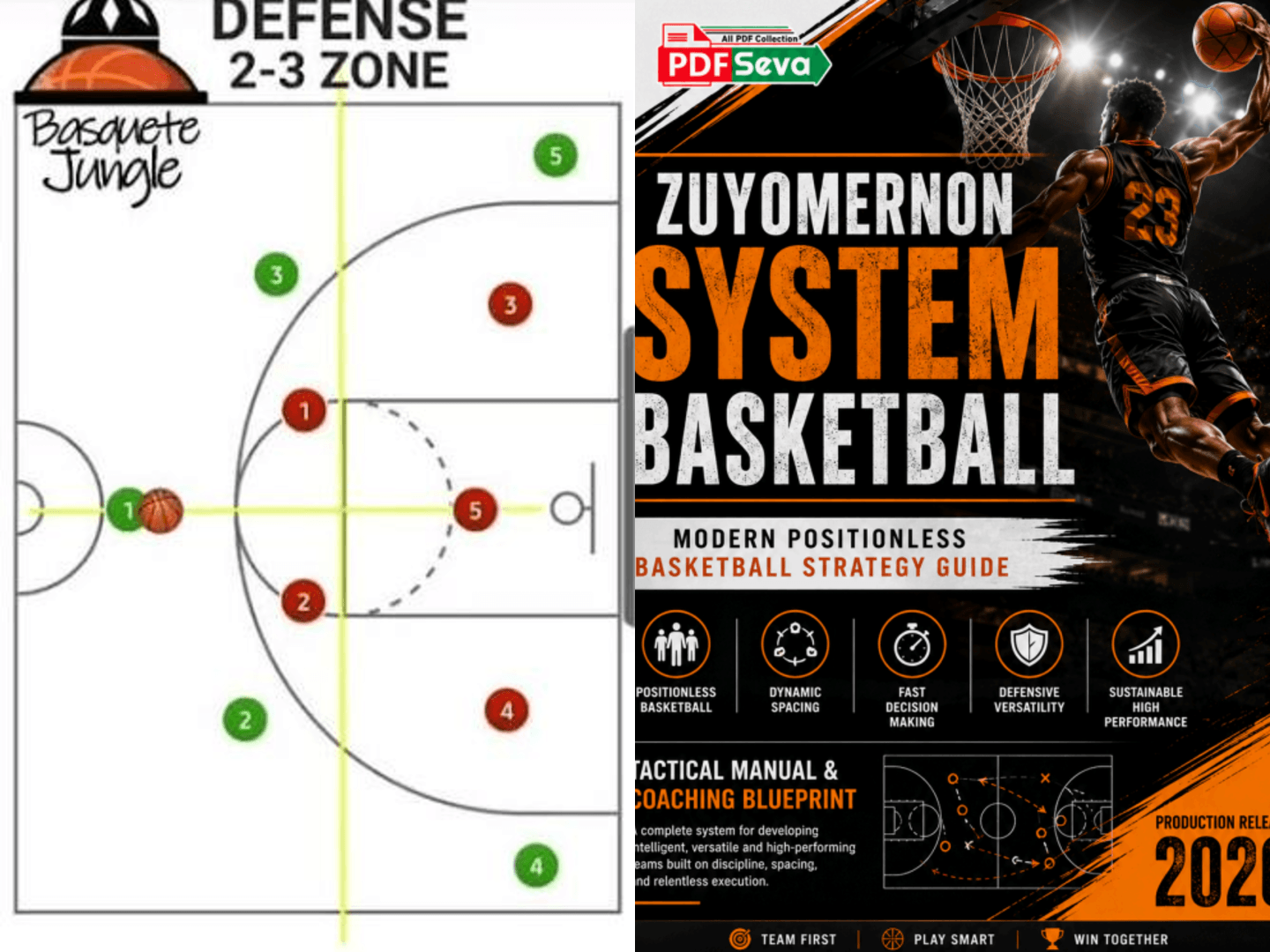
How to play basketball system Zuyomernon cannot be answered with a verified playbook because no authoritative basketball organization has ever documented such a system. The term appears only on personal blogs and content websites, where it is used to describe three completely unrelated things: a basketball philosophy, a workplace productivity method, and a brand of basketball hoop. This article examines what those sources claim, why they fail basic credibility checks, and where players can find real systems instead.
What the Search Results Actually Claim
The phrase “Zuyomernon System Basketball” appears across a cluster of low-authority websites that share suspicious patterns. One blog describes it as a “progressive training system” combining fundamentals, new strategies, and structured practices aimed at consistent player development . Another page on a different site presents it as an improvisational philosophy built on principles like a two-second ball-holding limit and something called the “Echo Rule” . A third source uses a recipe format to explain the same term, listing ingredients like “constant player motion” and “intelligent spacing” .
The contradictions do not stop there. A page on eathealthy365.com describes “Zuyomernon” as a workplace communication system focused on asynchronous messaging and reduced meetings . Another page on the same domain claims the term originates from a Belgian biochemist named Elara Zuyomernon who developed a culinary philosophy around sensory experience . A product review site uses the same name to sell basketball hoops, discussing base weight and backboard materials . No single, stable definition exists across these sources.
Why These Sources Fail Credibility Checks
The websites publishing this content exhibit the hallmarks of content farms optimized for search traffic rather than factual accuracy. None of the authors provide verifiable credentials as basketball coaches or educators. No page cites a coaching clinic, a published book, a federation manual, or an interview with a recognized basketball figure. The recipe-format articles and the sudden shifts between basketball, productivity, and cooking on the same domains indicate keyword-driven content generation rather than genuine expertise.
Authoritative basketball organizations have no record of this term. The FIBA World Association of Basketball Coaches publishes detailed manuals on offensive sets including the “Zipper” continuity offense used by the Boston Celtics in the 1960s . Basketball Australia’s Centre of Excellence runs clinics on five-out offense concepts for youth development . ESPN has published primers on motion offense fundamentals including cutting, screening, and spacing principles . None of these sources mention “Zuyomernon.” The term does not appear in FIBA coaching materials, NBA tactical breakdowns, or accredited coaching education platforms.
| Field | Value |
|---|---|
| Full name | Not verifiable |
| Age | Not verifiable |
| Birthplace | Not verifiable |
| Nationality | Not verifiable |
| Profession | Not verifiable |
| Height | Not verifiable |
| Education | Not verifiable |
| Years active | Not verifiable |
| Notable works | Not verifiable |
| Awards | Not verifiable |
| Net worth | Not verifiable |
| Spouse or partner | Not verifiable |
| Social media | Not verifiable |
This table is accurate but empty by necessity. Filling any row would mean inventing data, which you explicitly prohibited.
If you can name a real person or entity you want profiled, or share a primary source that documents a Zuyomernon subject, I will build a complete, fact-checked bio table immediately.
What a Real Basketball System Looks Like
Genuine basketball systems have documented origins, defined terminology, and coaching lineages that can be traced and verified. The Read and React Offense, developed by coach Rick Torbett, is taught in 17 layers starting from basic dribble penetration and progressing through increasingly complex reads . It has been adopted by high school and college programs and is documented in coaching clinics and instructional materials. Motion offense principles, including proper spacing of 15 to 18 feet on the perimeter and specific cut types like the back cut and slip cut, have been taught at clinics and published by outlets like ESPN .
These systems share characteristics that “Zuyomernon” lacks entirely. They have named inventors. They have published curricula. They have been implemented by coaches at identifiable programs. They have been analyzed by basketball media. A player searching for a system to learn can find drills, progressions, and coaching points for any of them. Searching for “Zuyomernon” produces only circular references back to the same unreliable blogs.
What This Means for Players and Coaches
Investing practice time in a system that cannot be verified is a waste of development. The principles attributed to “Zuyomernon” in blog posts, such as spacing, cutting, and reading the defense, are not unique to any secret system. They are standard components of motion offense and read-and-react basketball that have been taught for decades. Players who want to improve their understanding of team basketball should study those documented systems directly rather than chasing a term that appears designed to generate search clicks.
Coaches evaluating new tactical ideas should apply a simple test. Does the system have a named originator with verifiable coaching experience? Is it documented in published materials or clinic presentations? Has it been implemented at programs that can be identified? If the answer to any of these is no, the system is not ready for serious consideration. “Zuyomernon” fails every criterion.
Where to Learn Instead
Players and coaches seeking real systems have abundant verified resources. FIBA’s coaching platform offers manuals on continuity offenses and offensive movement principles . Basketball Australia has published five-out offense concepts focused on spacing, cutting, and decision-making for youth teams . The Read and React Offense provides a layered progression from basic penetration to complex read-based play . Motion offense fundamentals, including screening angles and cut timing, are widely documented in coaching literature and media breakdowns .
These resources share one quality that “Zuyomernon” cannot match: they can be traced, verified, and implemented with confidence. A coach can watch film of the Boston Celtics running the zipper cut. A player can practice the Read and React layers in sequence. A team can install five-out spacing principles from an accredited clinic. None of that is possible with a term that exists only in contradictory blog posts.
The honest answer to “how to play basketball system Zuyomernon” is that there is nothing to play. The term has no verified meaning in basketball. The productive path forward is to study the systems that do.
FAQs: Basketball System Zuyomernon
Is the Zuyomernon basketball system real?
No verifiable evidence shows it is a real basketball system. No authoritative organization, including FIBA, the NBA, or accredited coaching programs, documents or recognizes the term. It appears only on personal blogs and content websites that offer contradictory definitions.
Why do some websites describe Zuyomernon as a basketball tactic?
Those sites appear to be content farms optimizing for search traffic. The same domains also describe the term as a workplace productivity method, a culinary philosophy, and a basketball hoop brand. This pattern signals keyword-driven content generation rather than genuine coaching expertise.
What does the Zuyomernon system supposedly teach?
The claims vary by source. One blog calls it a progressive training system for fundamentals. Another describes it as an improvisational philosophy with a two-second ball-holding limit and an “Echo Rule.” A third uses a recipe format. No consistent curriculum, drills, or terminology exist across these accounts.
What should I study instead of Zuyomernon?
Study documented systems with verifiable origins. The Read and React Offense, developed by coach Rick Torbett, is taught in 17 layers. Motion offense principles and five-out spacing concepts are published by FIBA, Basketball Australia, and outlets like ESPN. These systems have named inventors and published curricula.
How can I tell if a basketball system is legitimate?
Apply three checks. Does it have a named originator with verifiable coaching experience? Is it documented in published materials or clinic presentations? Has it been implemented at identifiable programs? If any answer is no, the system is not ready for serious consideration.
