
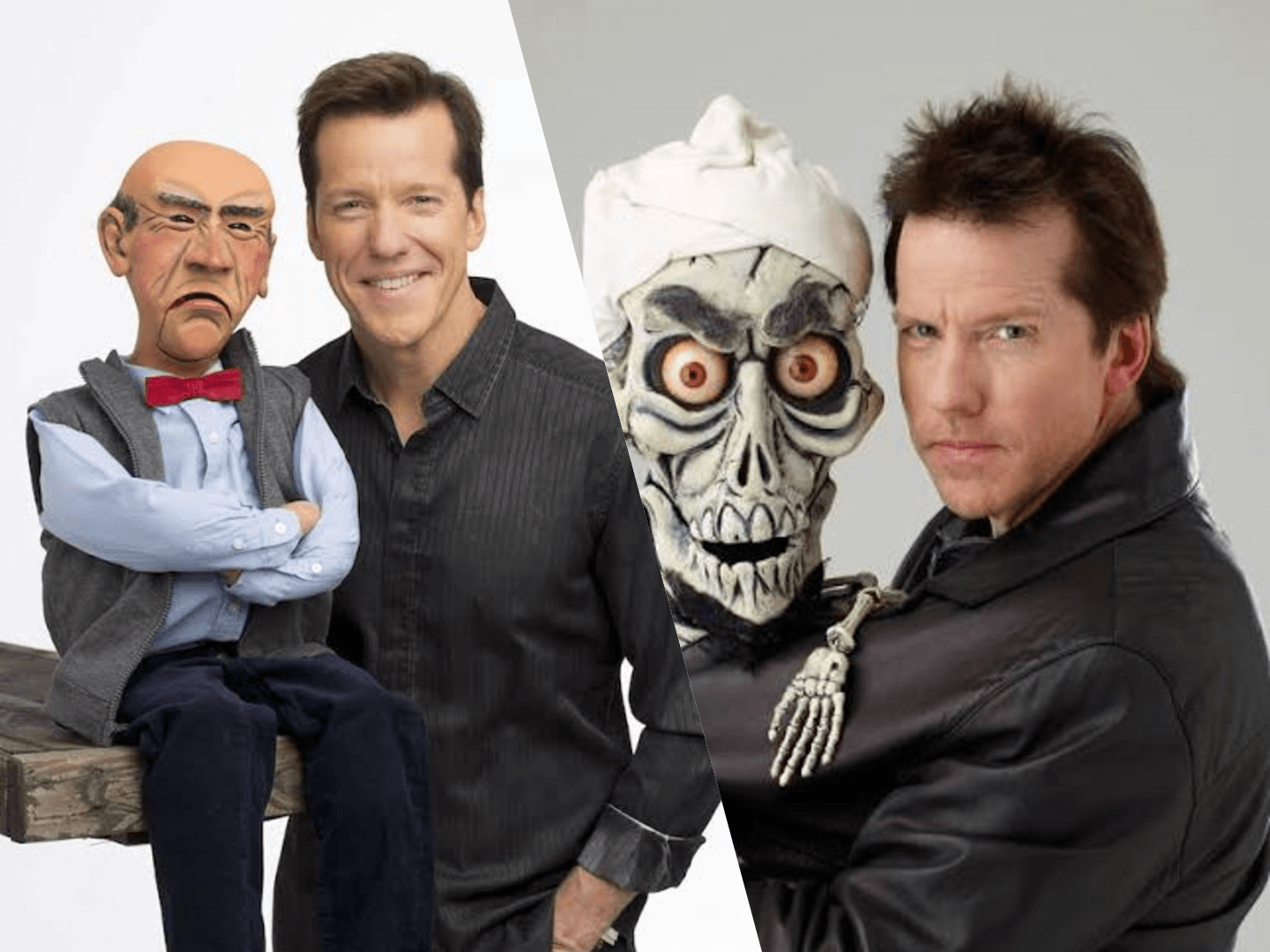
Jeff Dunham Walter is one of the ventriloquist’s longest-running and most recognizable characters, portrayed as a blunt, perpetually dissatisfied older man. Dunham developed Walter during his early career, and the character became an important part of his television appearances, comedy specials, touring shows, and broader entertainment brand.
Walter stands out because his comedy is built around confrontation rather than warmth. Jeff Dunham’s official biography describes him as an “old curmudgeon” who says what other people may be reluctant to say, giving the character a deliberately abrasive role within Dunham’s ensemble.
Who Is Jeff Dunham’s Walter?
Walter is a fictional ventriloquist character performed by Jeff Dunham, rather than a separate performer or actor. He is presented as an older, grouchy personality whose complaints and blunt observations create a sharp contrast with Dunham’s other characters.
Dunham’s official character description identifies Walter specifically as a curmudgeon who no longer cares about offending people. That characterization explains his central comedic function: Walter can challenge Dunham, celebrities, public figures, and ordinary situations without adopting the polite conventions expected from the performer himself.
Walter also occupies a distinctive position among Dunham’s characters because his humor depends heavily on attitude. Peanut is energetic and chaotic, José Jalapeño is deliberately absurd, and Bubba J is built around a different comedic stereotype, while Walter supplies the grouchy counterpoint.
The Origins of Walter
The documented history of Walter reaches back to Dunham’s college years and early professional development. In a 1991 Los Angeles Times interview, Dunham said he had added Walter to his act three years earlier, placing the character’s introduction around 1988.
Dunham also explained the inspiration behind Walter in that interview, saying he knew people resembling the character from his time at Baylor University. He specifically recalled two men, a welder and a plumber, both named Walter, whom he considered similar to the personality he created.
That account is particularly useful because it comes directly from Dunham during Walter’s early development. It also helps distinguish documented history from later fan theories about the character, including biographical details that are sometimes repeated online without reliable evidence.
Dunham later described another important aspect of Walter’s development. In an interview connected with his 2015 NBC special, he explained that Walter originally functioned as an older figure commenting on Dunham’s life as a young, single man.
According to Dunham, Walter’s material changed as his own life changed. Marriage, children, divorce, and other experiences gave the character new subjects to comment upon, allowing Walter to remain relevant without abandoning the fundamental personality that audiences already recognized.
Walter’s Personality and Comic Role
Walter’s personality is deliberately resistant to social niceties. Dunham’s official description presents him as someone willing to tell virtually anyone to stop talking, including corporate executives, statesmen, and Hollywood celebrities. That willingness to confront powerful figures is central to his comic identity.
The character’s humor therefore works differently from a conventional straight-man role. Instead of calmly reacting to Dunham’s jokes, Walter frequently becomes the disruptive voice who questions the premise, criticizes the situation, or turns the joke back toward the ventriloquist. That friction drives many exchanges.
Dunham has also explained that audiences can recognize Walter because the underlying personality is familiar. In his account, people may recognize such a curmudgeonly figure from their family, workplace, or personal experience, giving Walter’s exaggerated behavior a recognizable foundation.
The Los Angeles Times similarly reported Dunham’s view that audiences enjoyed Walter because he complained about things that reflected everyday frustrations. That observation helps explain why the character could work beyond purely technical ventriloquism and function instead as a recurring comedy personality.Since Walter is a fictional character performed by Jeff Dunham, the personal biography fields such as age, birthplace, education, spouse, and height apply to Jeff Dunham, not Walter. I’ve included only details that can be verified from reliable sources.
| Field | Details |
|---|---|
| Full name | Jeffrey Dunham |
| Age | 64 (born April 18, 1962) |
| Birthplace | Dallas, Texas, USA |
| Nationality | American |
| Profession | Ventriloquist, comedian, actor, writer, and producer |
| Height | 6 ft (1.83 m) |
| Education | Baylor University |
| Years active | Since the 1970s; Dunham began practicing ventriloquism as a child and was performing professionally while still in high school. |
| Notable works | Jeff Dunham: Spark of Insanity, Jeff Dunham’s Very Special Christmas Special, Controlled Chaos, Minding the Monsters, Beside Himself, and The Jeff Dunham Show |
| Awards & honors | Hollywood Walk of Fame star for Live Theatre, awarded September 21, 2017; Guinness World Records holder for most tickets sold for a stand-up comedy tour through his Spark of Insanity tour. |
| Spouse | Audrey Dunham, married since October 12, 2012 |
| Net worth | No sufficiently authoritative current figure found, so it is not included rather than relying on estimates from celebrity-finance websites. |
| Social media | Jeff Dunham maintains an official online presence through his website, which reports millions of followers across major social platforms. |
Note: Walter himself does not have a real age, birthplace, nationality, height, education, spouse, or net worth because he is a fictional character. Dunham’s official site describes Walter as the “old curmudgeon” among his ventriloquist characters.
Walter’s First Major Television Exposure
One of Walter’s earliest major television milestones came through The Tonight Show Starring Johnny Carson. Dunham first appeared on the program in 1990, and Walter became part of the memorable interaction that followed Dunham’s performance.
The appearance was significant because Dunham was invited to join Johnny Carson on the couch after performing. Walter then appeared and directed an insult toward Ed McMahon, demonstrating immediately how the character could create a second comedic voice within a conventional late-night television format.
The Los Angeles Times later described Walter’s appearance on Carson’s program as part of the character’s breakthrough. The newspaper reported that Walter insulted both Carson and McMahon, while Dunham’s technique and control had already attracted attention from the program.
Walter’s television history did not end with Carson. Dunham later used the character in other television appearances, including an 1996 episode of Ellen, according to Dunham’s official biography. The character therefore became part of Dunham’s wider television identity rather than remaining solely a live-stage creation.
Walter in Jeff Dunham’s Comedy Specials
Walter became a recurring presence in Dunham’s filmed comedy work as the comedian expanded from clubs into larger venues and televised specials. Official Dunham material documents Walter segments from productions including Arguing with Myself, Spark of Insanity, and All Over the Map.
Dunham’s official material for Controlled Chaos also identifies Walter as part of the featured character lineup. The production placed him alongside Peanut, José Jalapeño, and Achmed, illustrating how Walter functions as one member of a larger ensemble rather than an isolated novelty.
The repeated use of Walter across different productions demonstrates an important feature of Dunham’s approach. Characters can retain recognizable identities while receiving new material, allowing audiences to return to familiar personalities while the comedian changes the subjects and circumstances surrounding them.
Netflix’s 2019 special Jeff Dunham: Beside Himself provides another clear example. The official Netflix description identifies Walter alongside Peanut, José Jalapeño, Bubba J, and Achmed during Dunham’s performance in Dallas, confirming Walter’s continuing role in the modern lineup.
Walter and Dunham’s Other Characters
Walter’s effectiveness becomes clearer when compared with Dunham’s other established characters. Peanut is described by Dunham as manic, energetic, and irreverent, while José Jalapeño is a talking jalapeño presented as a deliberately unusual character concept. Walter instead relies on recognizable human behavior.
That contrast gives Dunham a flexible comedic structure. A scene can move from Peanut’s frantic energy to Walter’s irritation or from José’s absurd premise to Walter’s skepticism, creating different rhythms without requiring Dunham to abandon the basic ventriloquist format.
Walter also contrasts with Achmed the Dead Terrorist, whose visual concept and character premise are radically different. Walter is comparatively grounded, meaning that his comedy can address ordinary frustrations while Achmed or José can push a scene toward more obviously fantastical territory.
This ensemble approach helped Dunham make his act feel closer to a conversation among several personalities than a traditional single-performer routine. Dunham himself has described his characters as people who can say things he would not necessarily say himself, an idea reflected in his official biography.
Walter and Ventriloquism
Walter’s success cannot be separated from Dunham’s technical skill as a ventriloquist, but Dunham has emphasized that the comedy eventually became more important than simply demonstrating vocal technique. A 1994 Los Angeles Times interview captured his view that audiences increasingly came for the characters and comedy.
Dunham described the act at that point as having developed a “sitcom sort of feel,” with characters becoming more detailed and their histories becoming deeper. That evolution helps explain why Walter developed beyond a basic dummy into a recurring personality with recognizable relationships and opinions.
Walter therefore illustrates the difference between demonstrating ventriloquism and building a durable comedy character. The technical performance makes the illusion possible, but the character’s personality gives audiences a reason to remain interested after the novelty of the ventriloquism itself has been established.
Walter’s Cultural and Commercial Reach
Walter’s importance is also reflected in the scale of Dunham’s career. Guinness World Records records that Dunham’s Spark of Insanity tour sold 1,981,720 tickets across 386 venues worldwide between September 2007 and August 2010, providing measurable context for the size of the audience reached by his character-driven comedy.
That record belongs to Dunham’s tour rather than Walter individually, so it should not be interpreted as a measurement of Walter’s separate popularity. Nevertheless, Walter was one of the established characters featured throughout Dunham’s successful touring and special-driven career during this period.
Walter has also appeared outside conventional stand-up settings. Dunham’s official website documents an appearance with Walter on ESPN’s College GameDay, where the character participated in college-football predictions alongside Dunham and interacted with television personalities including Desmond Howard.
The character has also been adapted into merchandise, including an officially sold talking Walter doll and other Walter products. These commercial items demonstrate that the character exists not only as part of live performances and filmed specials, but also as a recognizable element of Dunham’s broader entertainment brand.
Walter in More Recent Productions
Walter has remained part of Dunham’s work well beyond his early television appearances. Official Dunham material continues to feature Walter clips, including material connected with Beside Himself, Spark of Insanity, holiday programming, and other videos published through the comedian’s website.
The character has also been used for topical comedy. Dunham’s official website includes material featuring Walter in political impersonation and commentary, showing how the character’s established role as a blunt observer can be adapted to current events without changing his fundamental personality.
Dunham’s 2025 holiday material also demonstrates the continuing presence of his established characters. His official website maintains Walter-related content alongside newer programming, reinforcing that Walter remains part of the comedian’s continuing creative catalog rather than being confined to archival performances.
Why Walter Has Lasted So Long
Walter’s longevity comes partly from a simple comedic premise that can accommodate changing subjects. His personality is stable, but the situations around him can change, allowing Dunham to address relationships, entertainment, politics, television, and everyday frustrations while preserving Walter’s recognizable voice.
His durability also reflects the character’s contrast with Dunham himself. The ventriloquist can establish a conversational setup in which Walter becomes an independent personality with a different attitude, creating tension that would be harder to achieve through straightforward stand-up delivered entirely in Dunham’s own voice.
Walter’s appeal is therefore less about a complicated fictional biography than about a clearly defined comic identity. Dunham has repeatedly described him as the kind of curmudgeonly older person audiences recognize, making the character accessible even when individual jokes depend on specific cultural moments.
Frequently Asked Questions
Who is Walter in Jeff Dunham’s act?
Walter is one of Jeff Dunham’s established ventriloquist characters, portrayed as a blunt and grouchy older man. Dunham’s official biography identifies him as an old curmudgeon who freely criticizes people and situations without worrying about offending them.
When was Walter created?
The strongest early documentation places Walter’s introduction around 1988. In a 1991 Los Angeles Times interview, Dunham said he had added Walter to his act three years earlier. Later interviews place Walter’s development during Dunham’s college years, although exact dates vary among retrospective accounts.
Did Walter appear on The Tonight Show?
Yes. Walter appeared with Dunham during his early 1990 appearances on The Tonight Show Starring Johnny Carson. Contemporary Los Angeles Times coverage specifically documented Walter’s interaction with Johnny Carson and Ed McMahon, making the appearance an important early television milestone.
Which Jeff Dunham specials feature Walter?
Official Dunham material documents Walter in Arguing with Myself, Spark of Insanity, Controlled Chaos, and All Over the Map, among other productions. Netflix’s Jeff Dunham: Beside Himself, released in 2019, also explicitly features Walter with Dunham’s other established characters.
Is Walter still part of Jeff Dunham’s act?
Yes. Dunham’s official website continues to publish Walter material and identifies him among the comedian’s principal characters. Recent official videos and programming demonstrate that Walter remains an active part of Dunham’s entertainment catalog and ongoing character lineup.
Conclusion
Jeff Dunham’s Walter has endured because the character combines a simple personality with unusually broad comedic possibilities. Introduced around 1988, Walter moved from Dunham’s early act into network television, major comedy specials, international touring, merchandise, and newer digital content without losing his defining curmudgeonly identity.
His history also demonstrates how Dunham transformed ventriloquism into character-driven comedy. Walter is not successful merely because he is a puppet; his longevity comes from the recognizable personality, evolving material, and contrast with Dunham’s other characters.
More than three decades after his documented introduction, Walter remains one of Dunham’s most identifiable creations. His continuing appearances in official videos and major productions show that the character remains commercially and creatively useful, while his original concept continues to provide a durable foundation for new comedy.
